Short-Chain Peptides
BPC-157 Research Peptide
A synthetic 15-amino-acid pentadecapeptide referenced in preclinical and in-vitro literature. Supplied as a laboratory reference compound. For research use only.
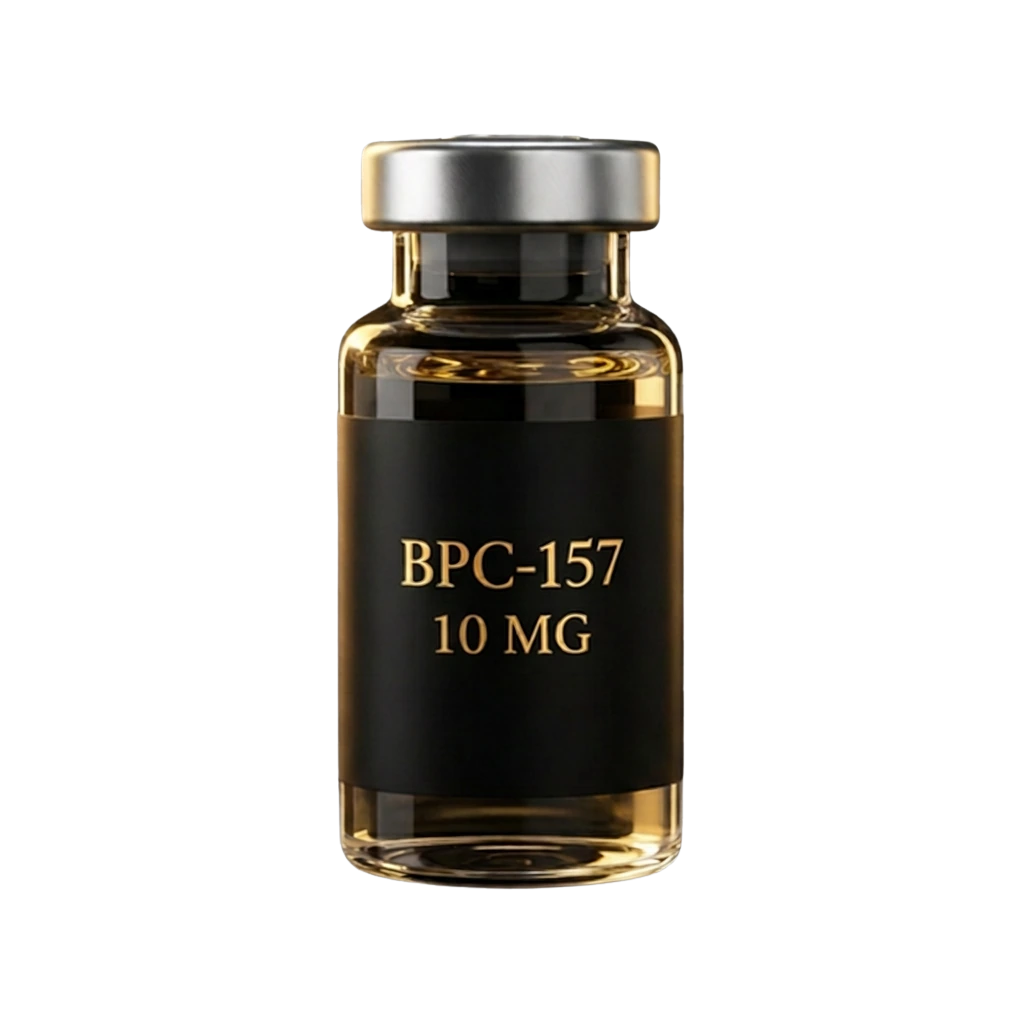
$49.99 — 10mg vial
| Purity | ≥99% |
| Quantity | 10mg |
| Molecular Weight | 1419.53 g/mol |
| Sequence | Gly-Glu-Pro-Pro-Pro-Gly-Lys-Pro-Ala-Asp-Asp-Ala-Gly-Leu-Val |
| Category | Short-Chain Peptides |
| Latest batch tested | 06/19/26 |
BPC-157 in Research
BPC-157 is a synthetic pentadecapeptide (15 amino acids, 1419.53 g/mol) whose sequence derives from a partial sequence identified in human gastric juice. It is one of the most requested compounds in the regenerative-research space, with a preclinical literature spanning wound-healing models, gastrointestinal cytoprotection, and angiogenic signaling — including reported VEGFR2 pathway involvement.
Aurum supplies BPC-157 as a lyophilized laboratory reference compound at ≥99% chromatographic purity, with each lot verified by independent HPLC and mass-spectrometry testing and documented on a batch-specific certificate of analysis. Its reported stability in gastric-juice models is one reason the compound features so heavily in oral-route research designs.
Research Overview
- Investigated for its role in accelerating wound healing in animal models
- Studied for potential gastrointestinal protective effects
- Research suggests involvement in angiogenesis modulation
- Explored for tendon and ligament repair mechanisms in preclinical studies
- Demonstrated stability in human gastric juice in vitro
Quality & Testing
Every BPC-157 batch is verified by independent third-party HPLC and mass-spectrometry testing, with a batch-specific certificate of analysis available on the COA page.
Laboratory Handling & Storage
Lyophilized peptides are supplied as a freeze-dried powder and are most stable stored cold (2–8°C), protected from light and moisture, in the original sealed vial. Under these conditions the research literature generally reports multi-year integrity for dry peptide material.
Once reconstituted in a laboratory setting, solutions are typically stored refrigerated and used within the window appropriate to the diluent and compound; repeated freeze–thaw cycles are avoided because they can promote aggregation. See our research overview on reconstitution and lyophilization for the underlying formulation science.
Frequently Asked Questions
What is BPC-157?
BPC-157 (Body Protection Compound-157) is a synthetic 15-amino-acid peptide studied in preclinical models of tissue repair, gastrointestinal protection, and angiogenesis. It is a research compound — not an approved therapeutic.
How is the purity of this BPC-157 verified?
Every batch is tested by an independent laboratory using HPLC for chromatographic purity (≥99%) and mass spectrometry for identity confirmation. The lot-specific certificate of analysis is available on the COA page and linked from this listing.
How does BPC-157 differ from TB-500 in the research literature?
They are structurally unrelated. BPC-157 is a gastric-derived pentadecapeptide studied for cytoprotection and angiogenic signaling, while TB-500 relates to the actin-binding protein Thymosin Beta-4. They are often compared because both appear in preclinical repair models, and both are available here for research.
Is BPC-157 for human use?
No. BPC-157 is sold strictly for in-vitro and preclinical laboratory research. It is not for human consumption, diagnosis, treatment, or any medical use.