GLP Analogs
GLP-3 (RT) Research Peptide
A synthetic tri-receptor agonist peptide (GIP/GLP-1/glucagon) referenced in published in-vitro receptor-binding literature. Supplied lyophilized as a laboratory reference compound. For in-vitro research use only.
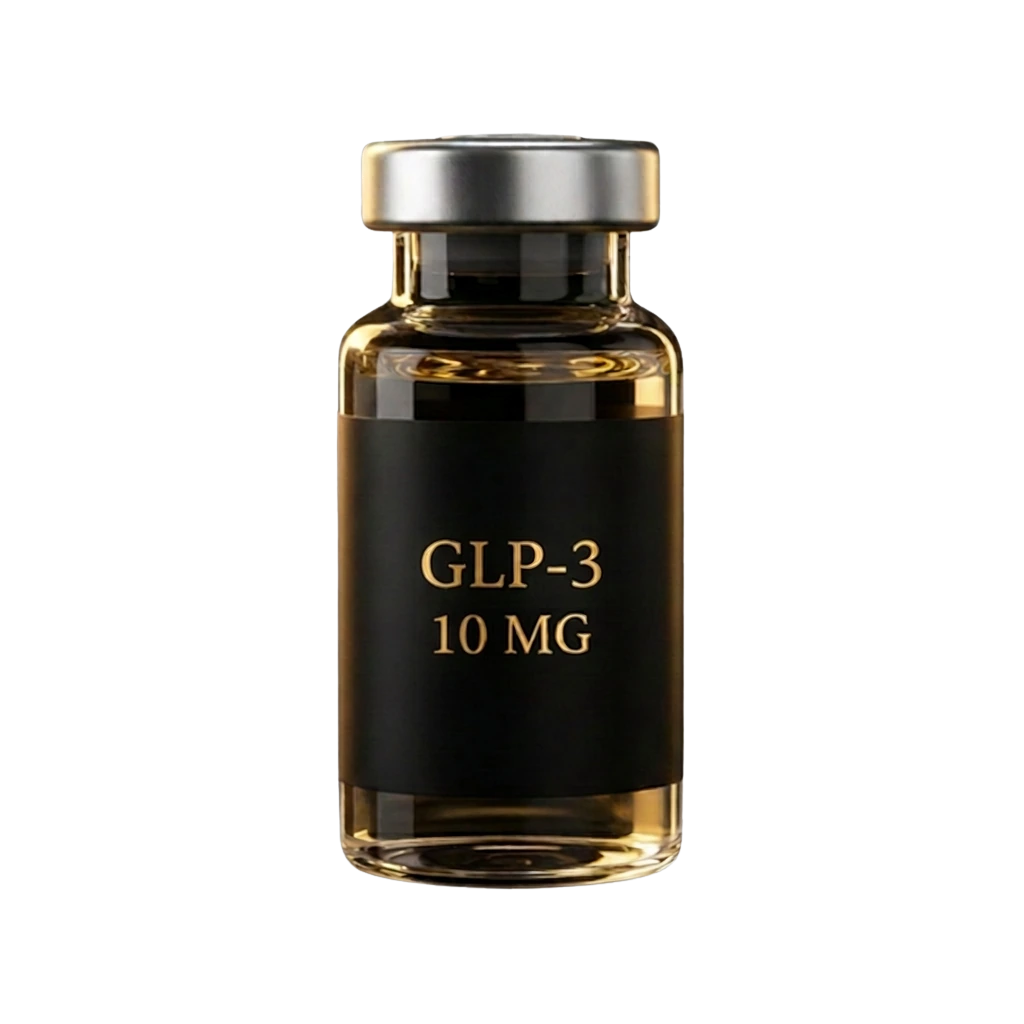
$69.99 — 10mg vial
| Purity | ≥99% |
| Quantity | 10mg |
| Molecular Weight | 4767.39 g/mol |
| Sequence | Tyr-Aib-Glu-Gly-Thr-Phe-Thr-Ser-Asp-Tyr-Ser-Ile-Leu-Leu-Asp-Lys(γGlu-C20 diacid)-Ile-Ala-Gln-Glu-Ala-Phe-Ile-Glu-Trp-Leu-Ile-Ala-Gly-Gly-Pro-Ser-Ser-Gly-Ala-Pro-Pro-Pro-Ser-NH₂ |
| Category | GLP Analogs |
| Latest batch tested | 07/20/26 |
GLP-3 (RT) in Research
GLP-3 (RT) is a synthetic tri-receptor agonist research peptide engineered to engage the GIP, GLP-1, and glucagon receptors simultaneously — the newest and broadest design in the incretin-analog class. Its in-vitro literature examines how the added glucagon-receptor arm changes energy-metabolism signaling relative to single- and dual-receptor analogs.
Supplied lyophilized at 10mg and ≥99% HPLC purity — with full third-party documentation that goes beyond the standard COA: this compound's published batch records include endotoxin and heavy-metals reports alongside HPLC purity and MS identity.
Research Overview
- Studied for synergistic glycemic control through three complementary receptor pathways
- Investigated for glucagon-receptor-mediated cellular energy metabolism and metabolic signaling
- Researched for multi-receptor pharmacological effects on hepatic lipid metabolism pathways
- Explored for receptor-binding kinetics and tri-agonist pharmacokinetic profiling
- Preclinical research into GIP/GLP-1/glucagon receptor polypharmacology and signaling mechanisms
Quality & Testing
Every GLP-3 (RT) batch is verified by independent third-party HPLC and mass-spectrometry testing, with a batch-specific certificate of analysis available on the COA page.
Laboratory Handling & Storage
Lyophilized peptides are supplied as a freeze-dried powder and are most stable stored cold (2–8°C), protected from light and moisture, in the original sealed vial. Under these conditions the research literature generally reports multi-year integrity for dry peptide material.
Once reconstituted in a laboratory setting, solutions are typically stored refrigerated and used within the window appropriate to the diluent and compound; repeated freeze–thaw cycles are avoided because they can promote aggregation. See our research overview on reconstitution and lyophilization for the underlying formulation science.
GLP-class analogs carry fatty-acid side chains; laboratory protocols typically allow reconstituted solutions to dissolve undisturbed rather than shaking.
Frequently Asked Questions
What is GLP-3 (RT)?
GLP-3 (RT) is Aurum's catalog designation for a synthetic tri-agonist research peptide targeting the GIP, GLP-1, and glucagon receptors, supplied for in-vitro receptor-pharmacology study.
What extra testing does this compound receive?
In addition to the standard independent HPLC purity and MS identity verification, published batch documentation for GLP-3 (RT) includes endotoxin testing and heavy-metals screening — all available on the COA page.
How does the tri-agonist design matter in research?
Adding glucagon-receptor agonism to the dual-incretin design lets researchers study energy-expenditure and hepatic-metabolism signaling arms that single- and dual-receptor analogs cannot activate — a receptor-count comparison unique to this series.
Is GLP-3 (RT) for human use?
No. GLP-3 (RT) is sold strictly for in-vitro and preclinical laboratory research — not for human consumption or any medical use.