IGF Analogs
IGF-1 LR3 Research Peptide
IGF-1 LR3 is an 83 amino acid analog of human IGF-1 with an arginine substitution at position 3 and a 13 amino acid N-terminal extension peptide. It has reduced affinity for IGF binding proteins.
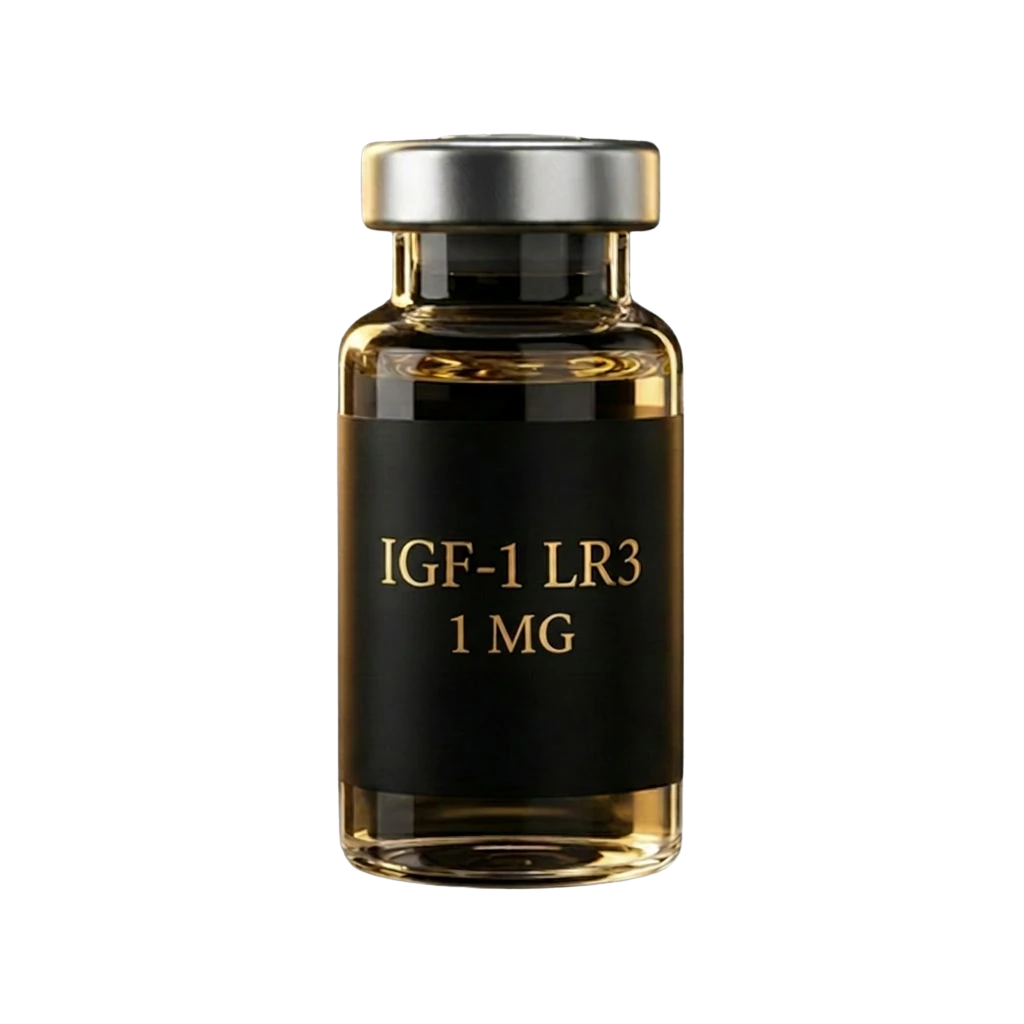
$89.99 — 1mg vial
| Purity | ≥99% |
| Quantity | 1mg |
| Molecular Weight | 9111.4 g/mol |
| Sequence | Modified IGF-1 with Arg³ substitution and 13 aa N-terminal extension |
| Category | IGF Analogs |
| Latest batch tested | 06/19/26 |
IGF-1 LR3 in Research
IGF-1 LR3 is an 83-amino-acid analog of human insulin-like growth factor 1, engineered with an Arg3 substitution and a 13-residue N-terminal extension. Those modifications sharply reduce binding to IGF-binding proteins, which in cell-culture research translates to markedly higher free-ligand availability at the IGF-1 receptor than native IGF-1.
At 9111.4 g/mol this is the largest single-chain compound in our catalog. Supplied lyophilized at ≥99% purity with batch-specific third-party HPLC and MS documentation.
Research Overview
- Studied for reduced IGFBP binding and increased bioavailability
- Investigated for IGF-1R receptor activation in cell culture
- Research into myogenic differentiation and proliferation
- Explored for metabolic effects in preclinical models
- In vitro studies on cell survival and anti-apoptotic signaling
Quality & Testing
Every IGF-1 LR3 batch is verified by independent third-party HPLC and mass-spectrometry testing, with a batch-specific certificate of analysis available on the COA page.
Laboratory Handling & Storage
Lyophilized peptides are supplied as a freeze-dried powder and are most stable stored cold (2–8°C), protected from light and moisture, in the original sealed vial. Under these conditions the research literature generally reports multi-year integrity for dry peptide material.
Once reconstituted in a laboratory setting, solutions are typically stored refrigerated and used within the window appropriate to the diluent and compound; repeated freeze–thaw cycles are avoided because they can promote aggregation. See our research overview on reconstitution and lyophilization for the underlying formulation science.
As a large recombinant-style analog, IGF-1 LR3 solutions are handled gently in the laboratory — vigorous agitation is avoided to limit shear-induced aggregation.
Frequently Asked Questions
What makes IGF-1 LR3 different from native IGF-1?
Two engineered changes — an arginine at position 3 and a 13-amino-acid N-terminal extension — reduce IGFBP binding dramatically, increasing free-ligand availability in culture systems while preserving IGF-1 receptor activity.
What is IGF-1 LR3 used for in research?
Primarily cell-culture work: IGF-1 receptor signaling, proliferation assays, and media supplementation studies where IGFBP sequestration of native IGF-1 would confound results.
Is IGF-1 LR3 for human use?
No. IGF-1 LR3 is strictly a laboratory research reagent, and it is prohibited in sport by WADA. Not for human consumption or medical use.