Nucleotides & Cofactors
NAD+ Research Peptide
NAD+ (Nicotinamide Adenine Dinucleotide) is a critical coenzyme present in every living cell. It plays a central role in cellular energy metabolism, mitochondrial function, and DNA repair. NAD+ has been extensively studied for its involvement in sirtuin activation, redox balance, and age-related cellular decline.
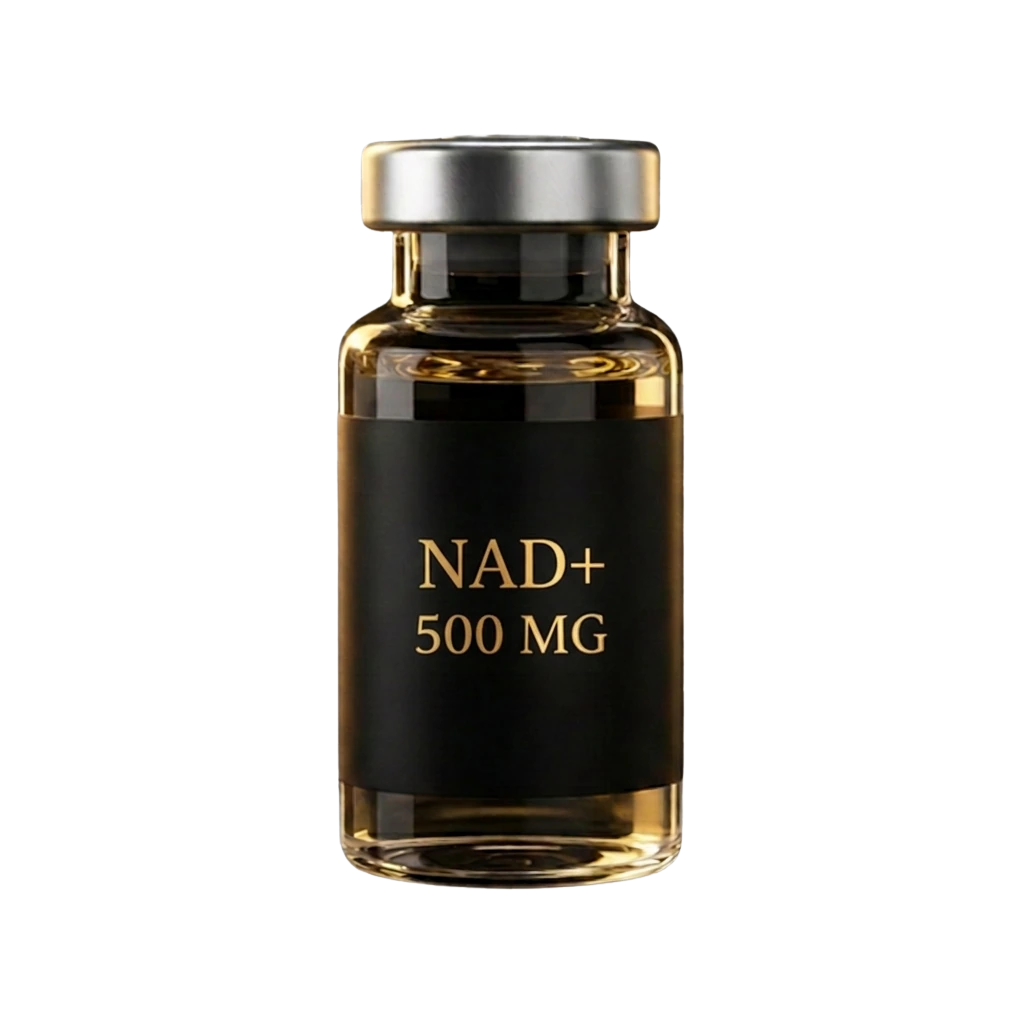
$59.99 — 500mg vial
| Purity | ≥99% |
| Quantity | 500mg |
| Molecular Weight | 663.43 g/mol |
| Sequence | Nicotinamide Adenine Dinucleotide (C₂₁H₂₇N₇O₁₄P₂) |
| Category | Nucleotides & Cofactors |
| Latest batch tested | 06/19/26 |
NAD+ in Research
NAD+ (nicotinamide adenine dinucleotide) is the universal redox coenzyme of cellular metabolism — the substrate consumed by sirtuins and PARP enzymes and the electron carrier of glycolysis and oxidative phosphorylation. Its central role in mitochondrial biogenesis and the reported age-related decline of cellular NAD+ pools drive a large modern research literature.
Chemically, NAD+ is a dinucleotide rather than a peptide — see our research article on its molecular classification. Supplied as 500mg of ≥99% material with batch-specific third-party documentation.
Research Overview
- Studied as a primary substrate for sirtuin and PARP enzyme activity
- Investigated for its role in mitochondrial biogenesis and ATP production
- Research into NAD+ decline as a hallmark of cellular aging
- Explored for DNA repair pathway support and genomic stability
- Preclinical models examining metabolic and neuroprotective signaling
Quality & Testing
Every NAD+ batch is verified by independent third-party HPLC and mass-spectrometry testing, with a batch-specific certificate of analysis available on the COA page.
Laboratory Handling & Storage
Lyophilized peptides are supplied as a freeze-dried powder and are most stable stored cold (2–8°C), protected from light and moisture, in the original sealed vial. Under these conditions the research literature generally reports multi-year integrity for dry peptide material.
Once reconstituted in a laboratory setting, solutions are typically stored refrigerated and used within the window appropriate to the diluent and compound; repeated freeze–thaw cycles are avoided because they can promote aggregation. See our research overview on reconstitution and lyophilization for the underlying formulation science.
NAD+ is hygroscopic; the vial is kept tightly sealed and protected from moisture, with cold storage extending dry-material stability.
Frequently Asked Questions
Is NAD+ a peptide?
No — NAD+ is a dinucleotide coenzyme built from adenine and nicotinamide nucleotides joined by phosphate groups. It is catalogued alongside our peptides as a research biochemical.
What does NAD+ research focus on?
The literature spans sirtuin and PARP enzymology, mitochondrial biogenesis, ATP production, and the observed decline of cellular NAD+ with age in model systems.
Is NAD+ for human use?
No. This NAD+ is a laboratory research reagent — not a supplement and not for human consumption.