Short-Chain Peptides
TB-500 Research Peptide
Thymosin Beta-4 fragment, a 43-amino acid peptide naturally occurring in virtually all human and animal cells. TB-500 has been studied for its role in cellular migration and differentiation.
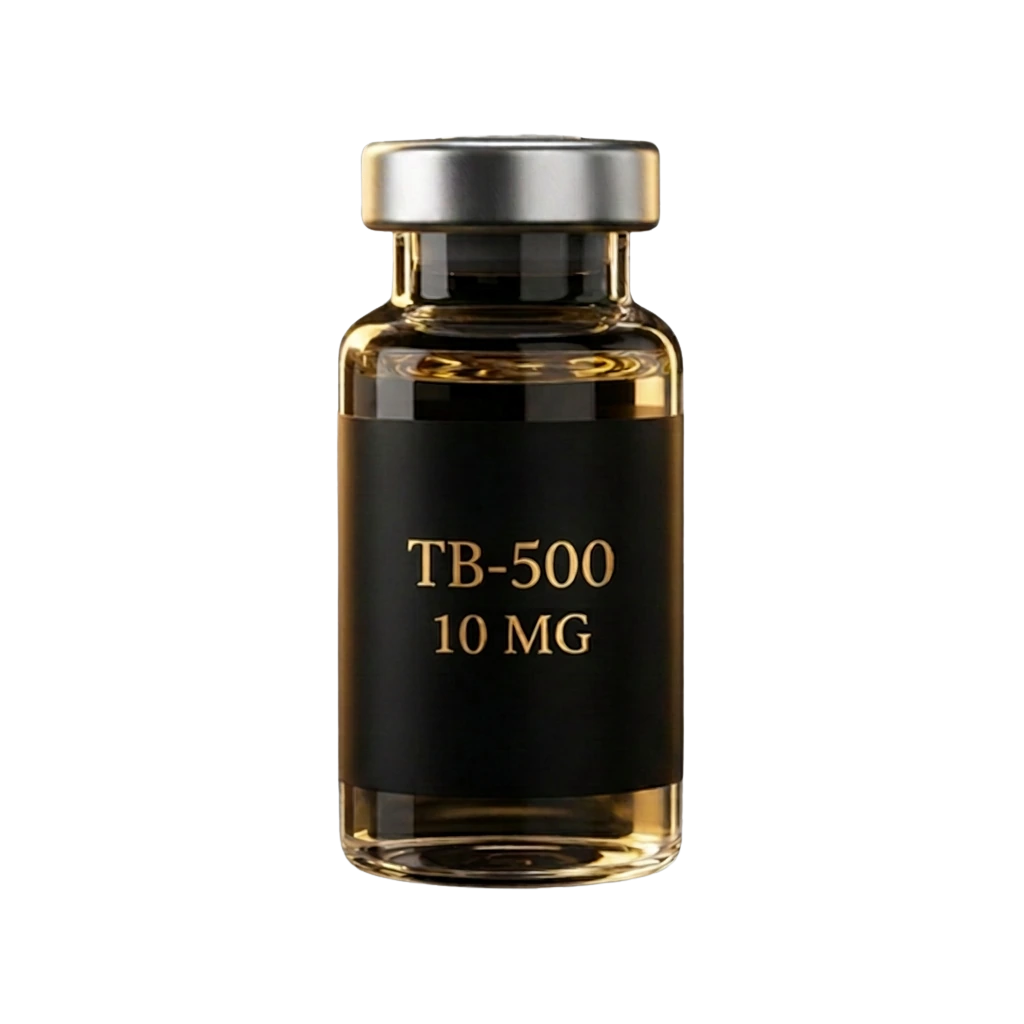
$64.99 — 10mg vial
| Purity | ≥99% |
| Quantity | 10mg |
| Molecular Weight | 4963.50 g/mol |
| Sequence | Ac-SDKP (N-terminal fragment of Thymosin Beta-4) |
| Category | Short-Chain Peptides |
| Latest batch tested | 06/17/26 |
TB-500 in Research
TB-500 is a synthetic peptide fragment associated with Thymosin Beta-4, a 43-amino-acid actin-sequestering protein present in virtually all mammalian cells. The parent molecule's central role in G-actin binding and cytoskeletal regulation underpins most of the mechanistic research interest — cell migration, angiogenesis, and tissue-remodeling processes in animal models.
Supplied lyophilized at ≥99% HPLC purity with batch-specific third-party COA documentation, TB-500 is frequently paired with BPC-157 in comparative preclinical repair studies, and the two are co-formulated in our Wolverine research blend.
Research Overview
- Researched for upregulation of actin in cell building
- Studied for promotion of cell migration and blood vessel formation
- Investigated for anti-inflammatory properties in animal models
- Explored for cardiac tissue repair mechanisms
- Research into hair follicle stem cell stimulation
Quality & Testing
Every TB-500 batch is verified by independent third-party HPLC and mass-spectrometry testing, with a batch-specific certificate of analysis available on the COA page.
Laboratory Handling & Storage
Lyophilized peptides are supplied as a freeze-dried powder and are most stable stored cold (2–8°C), protected from light and moisture, in the original sealed vial. Under these conditions the research literature generally reports multi-year integrity for dry peptide material.
Once reconstituted in a laboratory setting, solutions are typically stored refrigerated and used within the window appropriate to the diluent and compound; repeated freeze–thaw cycles are avoided because they can promote aggregation. See our research overview on reconstitution and lyophilization for the underlying formulation science.
Frequently Asked Questions
What is the relationship between TB-500 and Thymosin Beta-4?
TB-500 is a synthetic fragment related to Thymosin Beta-4, the naturally occurring actin-sequestering protein. Much of the published research concerns the full parent molecule; the fragment is used as a research proxy for its active region.
What do laboratory studies focus on with TB-500?
Preclinical work centers on actin sequestration, cytoskeletal reorganization, directed cell migration, and angiogenesis — processes relevant to wound-repair models in animals. No human therapeutic use is established.
Is TB-500 tested before shipping?
Yes. Each lot is verified by independent HPLC (≥99% purity) and mass-spectrometry identity testing, with the certificate of analysis published on our COA page.
Is TB-500 for human use?
No. TB-500 is a research compound sold strictly for laboratory use, and it is prohibited in sport by WADA. Not for human consumption or any medical use.